Check back soon
Once posts are published, you’ll see them here.
The human race is constantly moving forward and different periods have come to be known as times where certain minority groups have overcome discrimination and prejudice. Just as the 1960’s had the Civil Rights Movement as well as the Feminist Movement, it now seems that we are in the midst of a Transgender Movement. The idea of gender identity is constantly being questioned and the transgender community is finally being represented in popular culture. With people such as Laverne Cox and Caitlyn Jenner being shown in mainstream media, the world is waking up to the fact that we are not all cisgender, and that it is absolutely OK.
While living as an openly transgender person obviously has its serious challenges, studies show that society as a whole is slowly becoming more accepting and tolerant. Research that was conducted for HRC by Greenberg Quinlan Rosner Research shows that this year, in the United States, 22 percent of participants reported knowing a transgender person, an increase of 5 percent from last year. In addition, 66 percent of those people admit to having positive feelings towards them, compared to 13 percent who didn’t. This shows that not only are more people coming out as transgender due to increasing acceptance, but that having personal relationships with trans people actually helps to increase acceptance among the wider population as a whole. In other words, it is a continuous cycle.
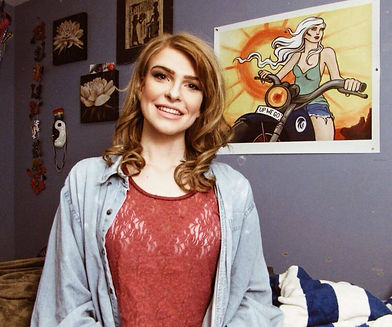
Gabrielle Diana Gladu, a 16 year-old transgender
teen from Ottawa, Ontario, believes that the
increase in transgender visibility in the media, as
well as society in general, has made her transition
much smoother than she could have ever
imagined.
“I was fourteen when I knew I wanted to transition
from male to female,” says Gladu. “I always had
the internalized feelings of being transgender, but
never acted on my feelings due to a lack of
representation and information”. She explains
that she only really understood why she felt the
way she did, which included “self-hatred due to
dysphoria”, once she gained some knowledge
of the trans community and what it truly meant to be transgender. Gaining that knowledge was what helped her finally understand the “disconnect between [her] body and soul”.
“I am part of a social movement, especially on YouTube, because I document my transition which gives me a bigger platform to learn about issues within my own community”, she says. Gladu also says her channel has presented her with many opportunities to grow and learn as an advocate for the trans community.
She explains that she was motivated to start her channel, where she posts videos such as “What Does it Mean to be Transgender?” and “Male to Female Transition Timeline”, “ due to the lack of representation and education on YouTube”. Gladu felt that it was her right as well as her duty to document her own life and personal experiences, so that is exactly what she did. “The response to my Youtube videos has been great; truly amazing and full of positivity.”
Although Gladu is grateful for the wonderful feedback she has received, she also acknowledges that the response would have been different a few years back. She admits that had it been a different time, she probably “would have been bashed and ridiculed”.
Gladu also expresses how proud it
makes her to finally see trans people
represented in mainstream media. She
says she believes that everyone
deserves equal opportunity, and she is
glad that we are headed in that
direction.
Although Gladu has received fairly
positive responses from family, friends
and viewers since the start of her
transition, she admits that there are
still extreme challenges that she, along
with other members of the transgender
community, face on an day-to-day basis.
“I face big amounts of oppression due to my gender identity”. Gladu admits that she has at times felt dehumanized and rejected by people. She also feels that transmisogyny is a major problem because trans women are often seen as inferior to men as well as cisgender women.
Not only does Gladu face every-day discrimination, but she also admits to being part of the statistics of sexual assault and suicide attempts.
Fortunately, suicide rates are dropping within the transgender community. Statistics that were published in the Toronto Sun show that access to legal forms (birth certificates, OHIP cards with their new gender, etc.) actually reduce suicidal thoughts among trans women by 44 percent. It was also proved that people who experience minimal levels of trans discrimination are 66 percent less likely to consider suicide.
However, as Gladu explained, trans people still face large amounts of discrimination, violence, isolation and self-hatred. An article published in Marie Claire shows that an astonishing 41 percent of transgender people have attempted suicide and that 19 percent have experienced violence or abuse from a family member. Many places in the world still lack transgender-protecting laws to ensure safety, and gender reassignment surgery continues to be out of many people’s price range. We have undoubtedly made major progress for the transgender community, but we still have a long way to go.
On a more positive note, Gladu also adds that trans people have not only gained visibility in the media but in the LGBTQ community as well. Although LGBTQ stands for lesbian, gay, bisexual, trans, or questioning, she says there was a time when the majority of the focus in said community was on sexual orientation and that people who struggled with gender identity were often disregarded. She believes that too is changing, and that “the LGBTQ+ community has grown a lot”.
After everything Gabrielle Diana Gladu has been through, her message to anyone out there who is struggling is to “stay strong and grounded”. She says she knows, first-hand, how difficult it may be, but that is important to find positivity in everything.
At this point in her transition, Gladu feels “powerful, strong, and happy.” She “feels accomplished and like life is finally falling into place.”

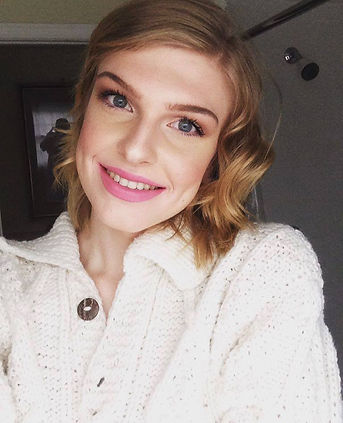
When asked about coming out, Gladu explained that her feelings were “a mixture of nervousness and relief”. She feared being rejected and abandoned by those closest to her, which prevented her from beginning her transition multiple times. But what Gladu experienced when she finally decided to come out was far from what she expected. She was given “an overwhelming amount of love and support”, which is, according to her, what got her through that tough time and continues to do so now.
Gladu has taken it upon herself to share her story with as much of the world as she can through her Youtube channel.